
Abstract Photography in Nature: Finding Beauty in the Unexpected
Abstract Nature Photography Prints
Abstract photography is one of my favorite ways to capture nature. It gives me an opportunity to take something that might initially seem ordinary or uninteresting and present it in a completely different way. Through color, light, texture, patterns, and shapes, a simple subject can become mysterious, dramatic, and sometimes difficult to recognize at first glance. That sense of discovery is one of the things I enjoy most about creating abstract nature photography.
Throughout my travels, the desert has provided some of my greatest inspiration. At first, a barren landscape may not seem like an obvious place to find abstract art, but the possibilities are almost endless when you begin looking more closely. Mud cracks, colorful badlands, scraggly cottonwood trees, sand dunes, and the small details within leaves can all become the foundation for an abstract photograph.
What interests me is often not the entire landscape, but one small part of it. Removing the surrounding environment can completely change how we see a familiar subject. Lines become shapes, textures become patterns, and subtle variations in light and color begin to take on a personality of their own. These quieter details of nature are what continue to inspire many of my abstract photography prints.

How I Photograph Abstract Images
My camera of choice is the Nikon Z8, which I often pair with either the Nikon 24-120mm f/4 or the NIKKOR 100-400mm. I find that these lenses give me the flexibility to simplify a composition and isolate the parts of a scene that interest me most.
When I create abstract images, I am rarely trying to show everything in front of me. Instead, I look for one particular element that stands out. It might be a small area of interesting light, the shape of ice, a combination of colors, or repeating patterns and forms within the landscape.
Simplification is a major part of the process.
Abstract photography does not always need an obvious subject or an immediate explanation. In many cases, I think the mystery is part of what makes an image interesting. The viewer may recognize something familiar without immediately understanding exactly what they are looking at.
That combination of mystery and simplicity can sound like an oxymoron, but I think it is one of the qualities that makes abstract art so enjoyable. Sand dunes can become flowing lines. Leaves can become combinations of color and texture. Mud cracks can form intricate patterns across the ground, while ice and even the northern lights can create shapes that seem almost impossible to find in nature.
There really is no single right or wrong way to create abstract landscape photography. For me, the goal is to find something visually interesting within a larger scene and remove enough of the surrounding information that the photograph begins to take on a life of its own.
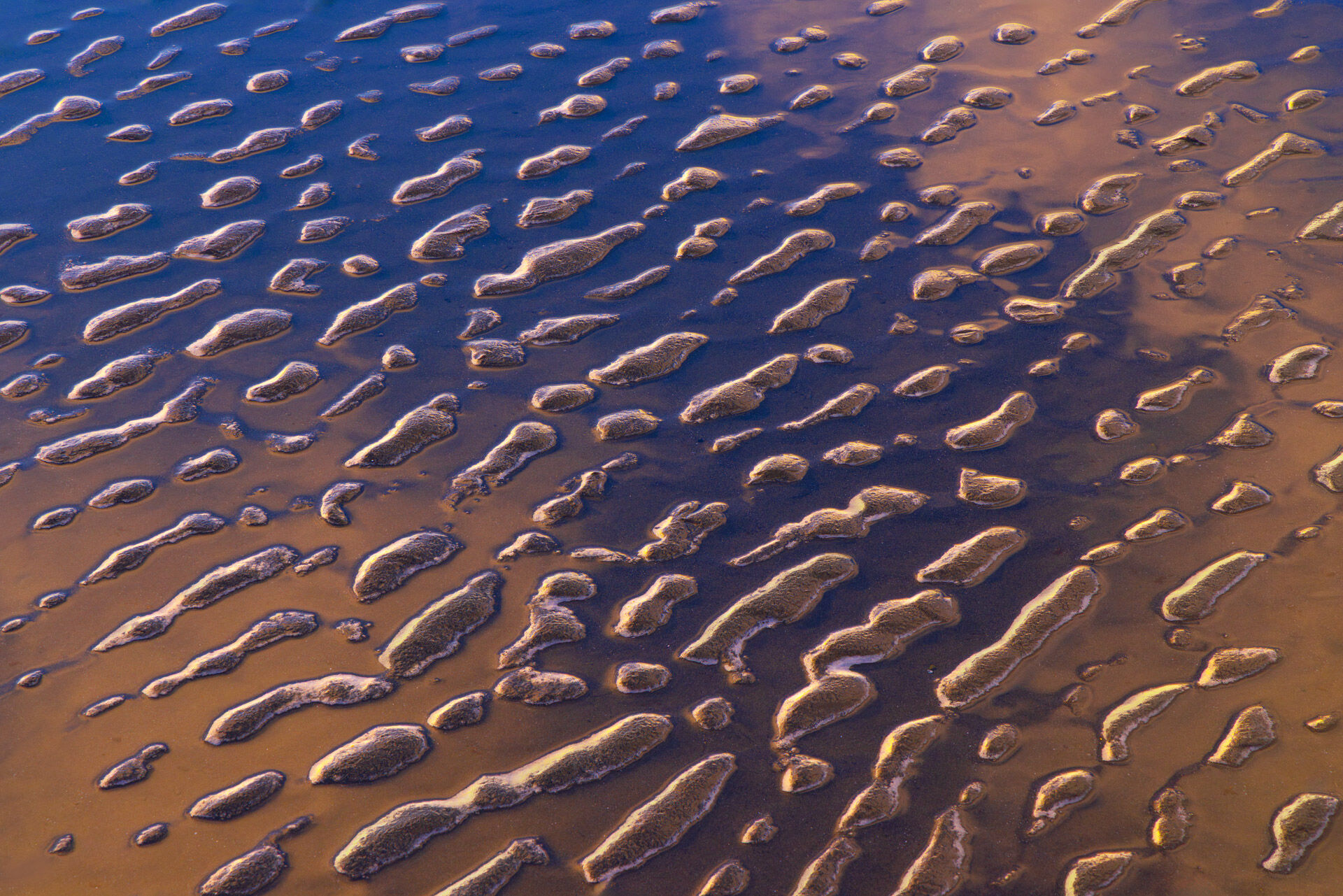
As a vibrant sunset took place on a gorgeous spring evening, I decided to shoot the rising tide. The small ripples of sand separated by water, took on the sky's reflected light.
Why Abstract Photography Makes Such an Interesting Centerpiece
One of my favorite things about abstract wall art is its ability to make someone stop and look a little longer.
A traditional grand landscape often tells you exactly what you are seeing. An abstract photograph can create a very different experience. Someone may walk up to the print and wonder what they are looking at, where the photograph was taken, or how something found in nature could create those particular colors, shapes, and patterns.
That curiosity naturally creates conversation.

Soft morning light reveals the colors in a section of 20 Mule Team Canyon in Death Valley National Park. I am continually drawn back to the pastel colors of the desert found in the Mojave.
It is also what allows an abstract picture to stand apart from more traditional landscape photography. I love photographing grand mountain scenes, forests, waterfalls, and other recognizable landscapes, but abstract photography offers something different. Instead of the location being the entire story, the photograph becomes more about the visual details within that location.
This is especially appealing when choosing abstract wall art for a home or office. A large abstract photography print can become a centerpiece without needing to depict an obvious landscape. Color, shape, light, and texture become the focus, allowing the artwork to create interest from across the room while revealing smaller details as you get closer.
My collection of fine art abstract photography prints comes from real moments and subjects I have discovered in nature. Whether the image began with desert mud cracks, sand dunes, leaves, ice, unusual light, or patterns within the landscape, my goal is always the same: to find something unexpected within the ordinary.
I invite you to explore my collection of abstract landscape photography prints and discover an image that makes you stop, look closer, and perhaps wonder for a moment exactly what you are seeing.

Well after sunset, the last bit of light was still illuminating the Ibex Wilderness in Death Valley National Park. This section of sand dunes receives gentle, angled light in the winter providing a soft, pastel color. I used a 30 second exposure to let in as much light as possible. Death Valley is an abstract dream.